
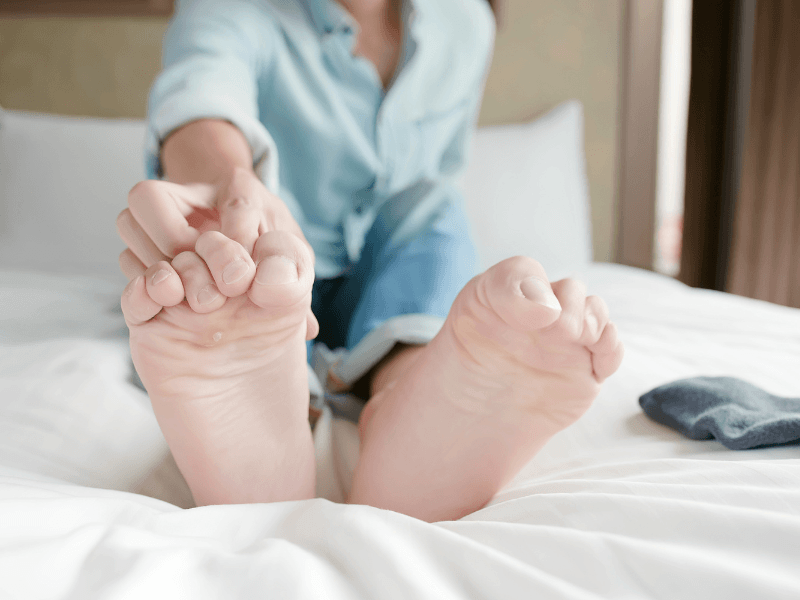
It’s easy to assume the itchy rash on your feet is athlete’s foot, as this fungal infection affects up to 70% of people at least once and irritated, sore skin is its hallmark. However, if you’re not really seeing an improvement with anti-fungal treatment or you develop symptoms not typically associated with fungal infections (such as leathery skin), you might not have athlete’s foot at all. Indeed, several common, non-fungal skin problems also lead to itchy foot rashes and often get mistaken for athlete’s foot. Your rash could actually be the result of hot weather or temperature changes, an allergen or irritant, or a severe dry skin condition.
It’s vital to identify the cause of your discomfort so you can receive the correct treatment. Read on to learn more about athlete’s foot and other major causes of itchy foot rashes. Or for expert help tailored to your needs, why not book an appointment at one of our superb, well-equipped London chiropody clinics today?
What Is Athlete’s Foot and What Does it Look Like?
Athlete’s foot is a fungal infection affecting the skin on one or both feet. The infection usually starts between the smallest toes (where sweat gathers) and thrives in warm, moist/sweaty, dark environments such as tight, non-breathable shoes. People can catch athlete’s foot if their bare feet are exposed to infected skin or contaminated objects/surfaces such as changing room floors.
As the fungi feed on the skin, an itchy rash appears and may spread around the toes, soles and sides of feet. The rash initially looks like a cluster of tiny red bumps. It may then become scaly and more inflamed, crack, flake and peel, develop white patches and blisters, feel hot and smell yeasty. The NHS website has photos of athlete’s foot rashes.
Athlete’s foot can also cause fungal nail infections. Infected toenails are thick, brittle and discoloured.
Athlete’s foot is treated with topical/oral anti-fungal medication.
Other Major Causes of Itchy Rashes on Feet
People without much knowledge of chiropody often confuse the following non-fungal skin issues with athlete’s foot. Let’s explore why that is and how these issues differ from the fungal infection.
Prickly Heat
Prickly heat rash is composed of tiny, itchy red spots like an early-stage athlete’s foot rash. But prickly heat isn’t an infection – it’s a sign your sweat ducts are blocked because you’ve produced lots of sweat and something (such as non-breathable footwear) has stopped it evaporating rapidly, leading to irritation. Calamine lotion can calm the skin.
Sunburn
An itchy, red, hot, sore, peeling rash could be athlete’s foot – but if it appears on parts of the feet exposed to strong sunshine (the tops, say, during sandal season), sunburn is the more likely culprit. Many people overlook their lower extremities when applying sunscreen, so feet aren’t protected against UV radiation. With after-sun cream and pain relief medication, sunburn can improve quite quickly.
Chilblains
Chilblains are areas of itchy, red, inflamed skin that can form a rash across the toes and therefore be misidentified as athlete’s foot. Like athlete’s foot rashes, they may be aggravated by tight shoes and last for weeks. Chilblains aren’t contagious, though – they indicate blood vessels warmed up and expanded too quickly after feet got damp and cold. A steroid cream can help to resolve the issue.
Contact Dermatitis
The itchy rash produced by contact dermatitis tends to be red, scaly and inflamed so often mimics athlete’s foot. It appears when skin is exposed to allergens (such as leather dyes) or irritants (such as detergents). If you recently bought new shoes, say, it’s worth considering whether contact dermatitis could be behind your rash. If it is, you should avoid the substance your skin dislikes and may benefit from a steroid cream.
Eczema
It’s particularly hard for people who don’t work in chiropody to distinguish between eczema and athlete’s foot rashes, as they share many symptoms including itchiness, redness, scaling, flaking, blistering and cracking. However, a key difference is only eczema makes skin feel leathery over time. Plus, eczema is linked to an overactive immune system and is typically a longer-term issue than athlete’s foot. A skin barrier repair cream can soothe the rash.
Overcome Your Itchy Foot Rash with Feet By Pody
You can rely on our experienced chiropody team to identify and treat your itchy foot rash. We can conduct a careful physical examination, perform tests (such as taking skin samples) if necessary, then provide a formal diagnosis and personalised treatment plan.
Don’t let an itchy foot rash stop you in your tracks – call Feet By Pody today on 0207 099 6657.