
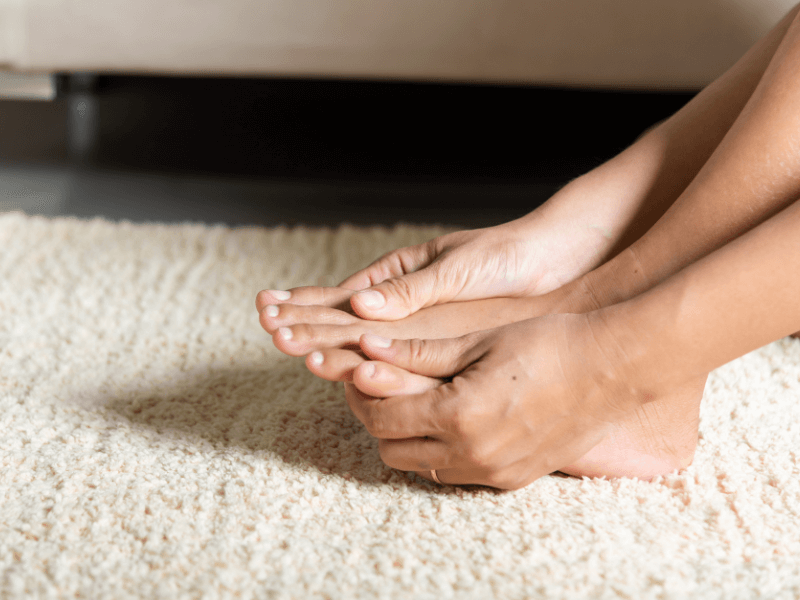
Metatarsalgia is pain in the ball of the foot caused by excessive pressure on the metatarsal bones. The most effective long-term treatment isn’t just cushioning – it’s correcting how pressure moves through your foot. At Feet By Pody in London, detailed gait and pressure analysis allows prescription orthotics to redistribute load, reduce inflammation, and prevent recurrence.
If you’re experiencing pain in the ball of your foot, especially when walking, standing, or pushing off, you may be dealing with metatarsalgia.
While it’s often described simply as “ball of foot pain,” that doesn’t fully capture what’s happening. Metatarsalgia is not a single condition. It’s a mechanical overload problem, meaning the structures under your forefoot are absorbing more pressure than they’re designed to tolerate.
Metatarsalgia tends to develop gradually. If left untreated, it’ll get progressively worse, and ultimately, it could severely restrict your mobility.
With that in mind, it makes sense to familiarise yourself with the risk factors for metatarsalgia, as well as why prescription orthotics (i.e. tailor-made shoe inserts) are such an effective way to relieve the pain.
What Is Metatarsalgia? And Why Does It Develop?
Metatarsalgia affects the metatarsal heads — the long bones that connect your midfoot to your toes. These bones absorb and transfer body weight during walking and running. During the push-off phase of gait, up to 80% of your body weight can pass through this area.
When pressure distribution becomes uneven, the soft tissues beneath the metatarsals — including fat pads, ligaments, joint capsules and nerves — become irritated and inflamed.
Common contributing factors include:
- High-impact sport (running, court sports, HIIT training)
- High heels and narrow toe boxes
- Age-related fat pad thinning
- Rapid increases in activity
- Biomechanical issues such as flat feet or high arches
- Previous injury altering gait
- Excess body weight increasing forefoot load
Research published by organisations such as the American College of Foot and Ankle Surgeons highlights abnormal forefoot pressure and poor footwear as key contributors to metatarsalgia development.
However, what many online articles miss is this:
It’s rarely just about “pressure.” It’s about where that pressure is going and why.
That’s where professional podiatric assessment becomes crucial.
Symptoms: It’s Not Always Just “Aching”
Metatarsalgia presents differently depending on which structures are irritated.
Patients commonly describe:
- A burning or sharp pain beneath one or more toes
- The sensation of “walking on a pebble”
- Shooting pain into the toes
- Tingling or numbness (which may indicate nerve involvement such as Morton’s neuroma)
- Increased pain when barefoot on hard floors
Callus formation beneath a specific metatarsal head is often a visible sign that excessive load is concentrated in one spot.
The NHS notes that persistent forefoot pain should be assessed if it lasts more than a few weeks — especially if it interferes with walking.
Why Cushioning Alone Isn’t Enough
Many people try gel pads or generic insoles first. While these may temporarily soften impact, they do not address the underlying biomechanics.
If your foot mechanics are directing too much force through the second or third metatarsal, adding soft padding without redistributing load is like putting a plaster over a structural crack.
Effective treatment requires:
- Identifying which metatarsal heads are overloaded
- Understanding why load transfer is abnormal
- Correcting the mechanics
That’s why custom prescription orthotics remain one of the most clinically effective treatments for persistent metatarsalgia.
How Custom Orthotics Relieve Metatarsalgia
At Feet By Pody, orthotics are not “off-the-shelf” inserts. They are prescribed medical devices designed following detailed biomechanical examination.
Using gait analysis and plantar pressure assessment, we identify:
- Load concentration patterns
- Asymmetry between feet
- Early heel lift or inefficient propulsion
- Joint stiffness affecting force transfer
The orthotic device is then engineered to:
- Redistribute pressure away from painful metatarsal heads
- Support the arch to improve weight transfer
- Improve forefoot alignment
- Reduce excessive pronation or instability
Clinical guidance from the National Institute for Health and Care Excellence supports orthotic intervention for mechanical foot pain where conservative measures alone are insufficient.
The difference patients often notice is not just reduced pain — but improved walking efficiency and reduced fatigue.
The Importance of Proper Assessment
One of the most overlooked issues with metatarsalgia is misdiagnosis.
Ball of foot pain can sometimes be:
- Stress fractures
- Morton’s neuroma
- Inflammatory arthritis
- Capsulitis
- Fat pad atrophy
Treating the wrong condition delays recovery.
That’s why a comprehensive clinical assessment is essential before prescribing orthotics. At Feet By Pody, assessment goes beyond symptom description — it focuses on mechanical cause.
If you’re experiencing persistent forefoot pain, our specialist biomechanical assessment and prescription orthotics service is designed specifically to diagnose and treat conditions like metatarsalgia at source. Book an appointment here
Footwear Matters — But It Must Match Your Foot
Supportive footwear plays a vital role in treatment success. Shoes should:
- Have a wide toe box
- Offer firm midsole support
- Avoid excessive heel height
- Provide adequate forefoot cushioning
However, even the best shoe cannot correct abnormal load distribution without orthotic support if the underlying mechanics are flawed.
This is particularly relevant for London professionals who spend long hours standing, commuting, or wearing formal footwear.
When Should You Seek Treatment?
You should book an assessment if:
- Pain persists longer than 2–3 weeks
- Symptoms worsen with activity
- You notice increasing callus under the forefoot
- You are modifying your gait to avoid discomfort
- You rely on painkillers to remain active
The earlier metatarsalgia is addressed, the easier it is to correct.
Left untreated, chronic overload can lead to joint instability, nerve irritation, or compensatory issues in the knees, hips or lower back.
Expert Metatarsalgia Treatment in London
At Feet By Pody, we combine clinical expertise with advanced diagnostic technology to deliver precise, evidence-based care. Our approach is focused not just on pain relief — but long-term prevention.
If you’re searching for metatarsalgia treatment in London, our experienced podiatry team can help you return to comfortable, confident movement.
Book Your Assessment Today
Call 0207 099 6657 or book an appointment online to schedule your comprehensive foot assessment and discover whether prescription orthotics are right for you.